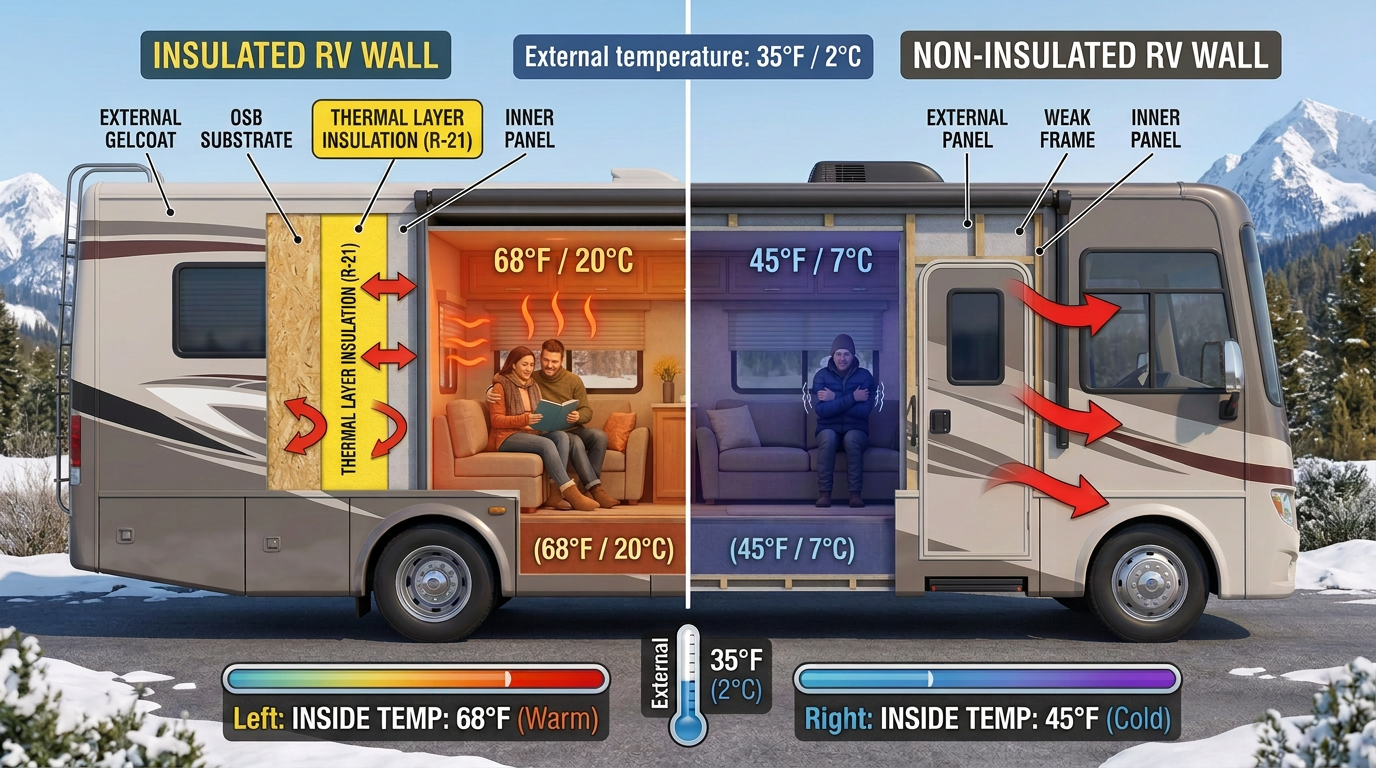
During the pandemic, there was a surge in RV & mobile camper purchases. Though sales have cooled, ownership has remained high. Just like traditional homes, RVs & campers need to have regulated interior temperatures as well. Excessive internal heat can cause seals to melt around the door & vents leading to water leaks and structual damage. Likewise, unchecked cold can lead to burst pipes and propane malfunctions. Thermal Shield Layer application will have a significant impact on prevent issues that are caused by unregulated temperatures inside RVs/campers.
REDEFINING MOBILE COMFORT
Most RVs have thin walls, high heat transfer, and constant condensation. Thermal Shield is the technical fix for the mobile world. We provide a zero-settle, high-reflection barrier that transforms a “metal box" into a precision-tempered sanctuary.
MATTERIAL INTEGRITY
Unlike traditional batting that sags and gaps, our material maintains absolute positioning. It stays locked in place for the life of the vehicle, ensuring no thermal leaks or hot spots ever develope.
THE MOISTURE BUFFER
Advanced vapor-management technology prevents the temperature “clash" that causes hidden condensation, protecting your chassis and interior from the silent threat of rot.